Un Abbraccio da Airolo
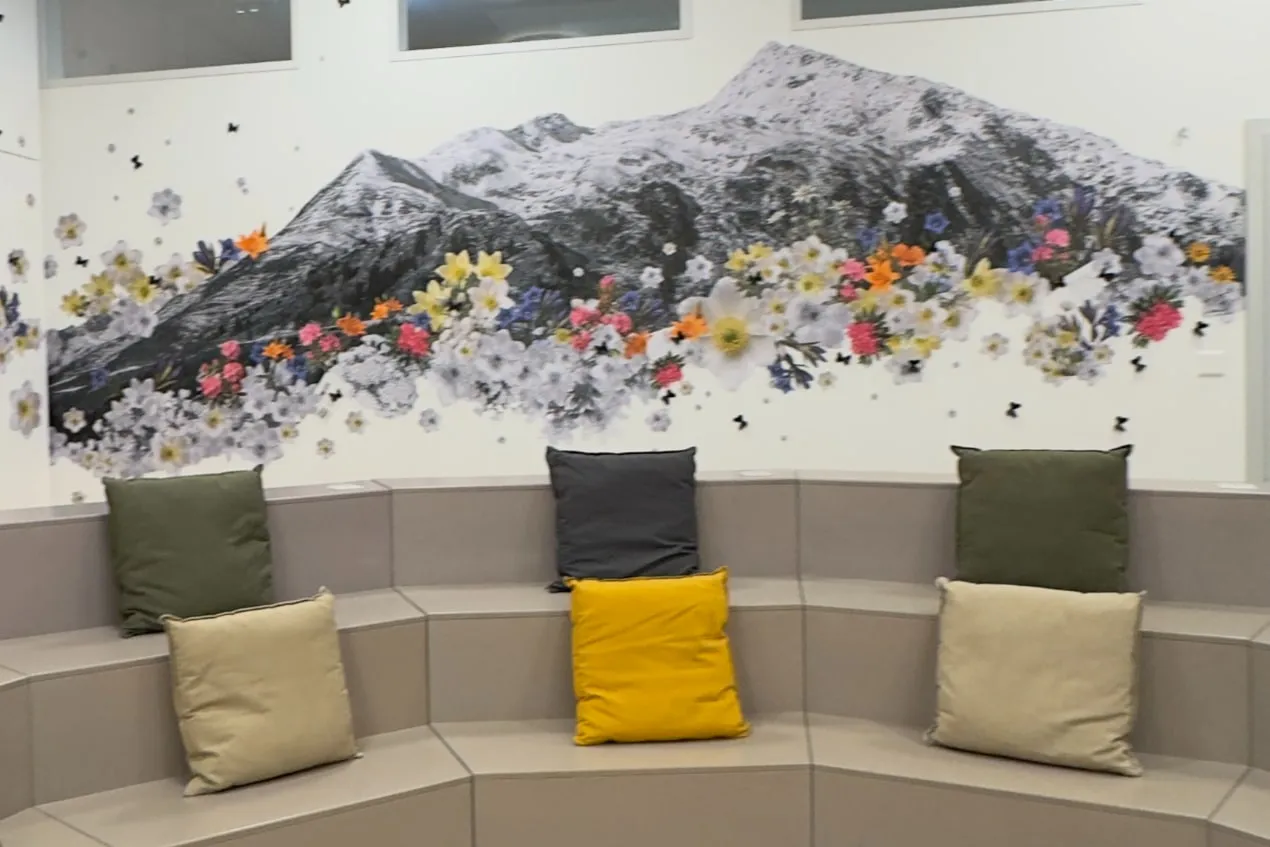
Un Abbraccio da Airolo (2026): site-specific paste-up work in the agora of the Casa della Sostenibilità USI, in Airolo. The Gotthard massif, the alpine flora and the letters that passed through the village’s former post office, in a composition made with the residents.
The work
Un Abbraccio da Airolo is a site-specific work that Yuri Catania made in January 2026 for the Casa della Sostenibilità of the Università della Svizzera italiana (USI), in Airolo. The installation runs along the walls of the agora, the space where students and researchers gather, for 15 metres in length and 2.7 in height.
The starting point is a panoramic photograph of the Gotthard massif. On the outline of the mountain, in black and white, the artist composed the flora of the alpine territory and the butterflies that inhabit these mountains. The technique is paste-up, with eco-friendly paper and glues, in keeping with the theme of the building that houses the work.
The building was once the central post office of Airolo. The work holds the two elements together: the nature of the Gotthard and the memory of the community.
“I wanted in some way to keep the memory alive by seeking out, thanks to the collaboration of the population, life stories of the place.”
Yuri Catania
Today the work forms the backdrop to the agora, where students and researchers from different countries meet to discuss climate change and the future. Hence the title.
“People are now surrounded by this virtual embrace, to talk about sustainability immersed in the representation of our mountains, of nature and of people’s memory.”
Yuri Catania
Technical details
- Year: 2026
- Location: agora of the Casa della Sostenibilità USI, Airolo, in the village’s former central post office
- Medium: paste-up; eco-friendly paper and glues; original letters included in the composition
- Dimensions: 270 × 1500 cm
- Image: panoramic photograph of the Gotthard massif; alpine flora; butterflies
- Making: three days, January 2026
- With: the residents of Airolo; the Associazione dell’Angolino; the team of the Casa della Sostenibilità, led by Giovanni Pellegri
- Commissioned by: Università della Svizzera italiana (USI)
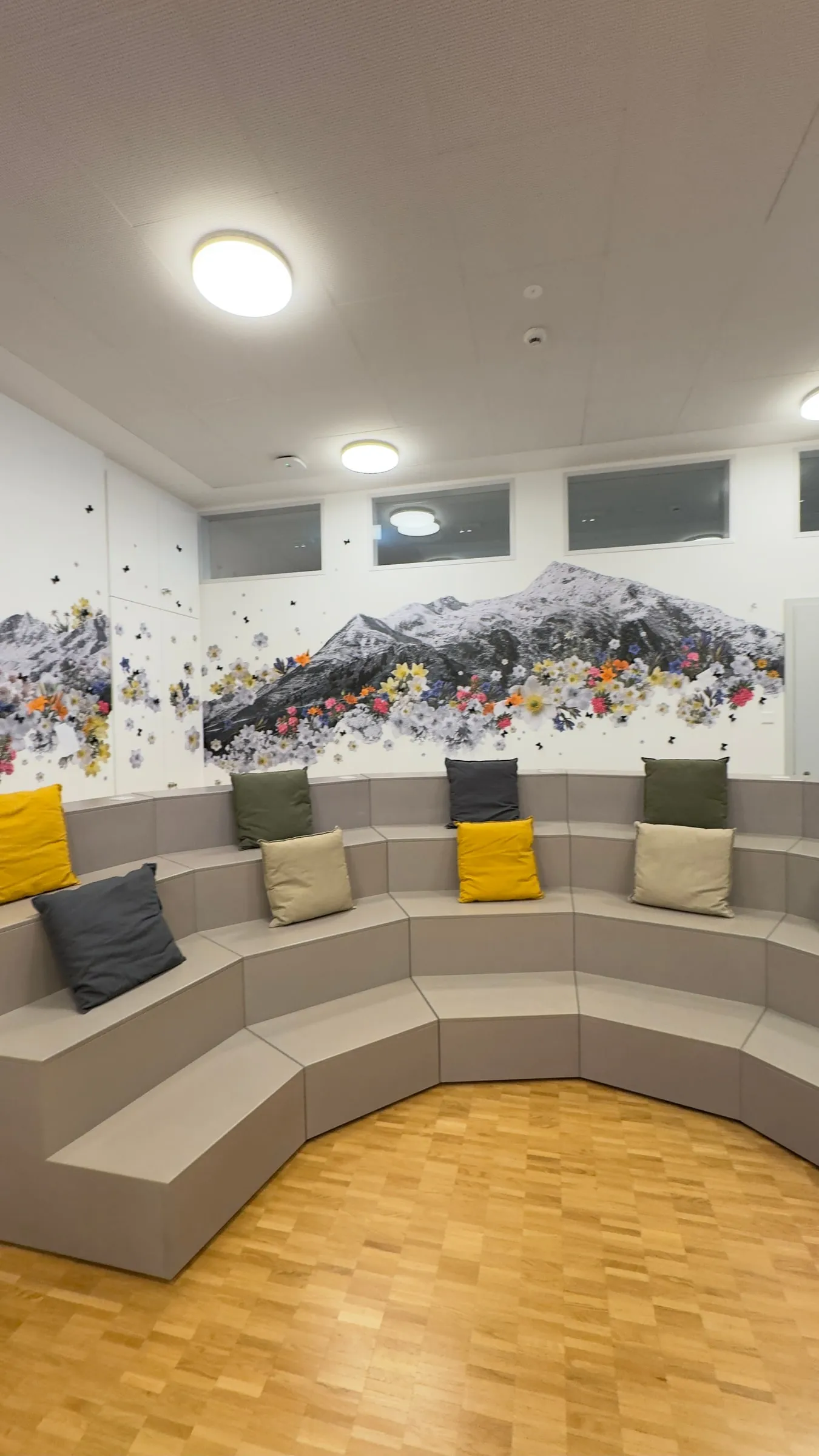
The work along the walls of the agora. 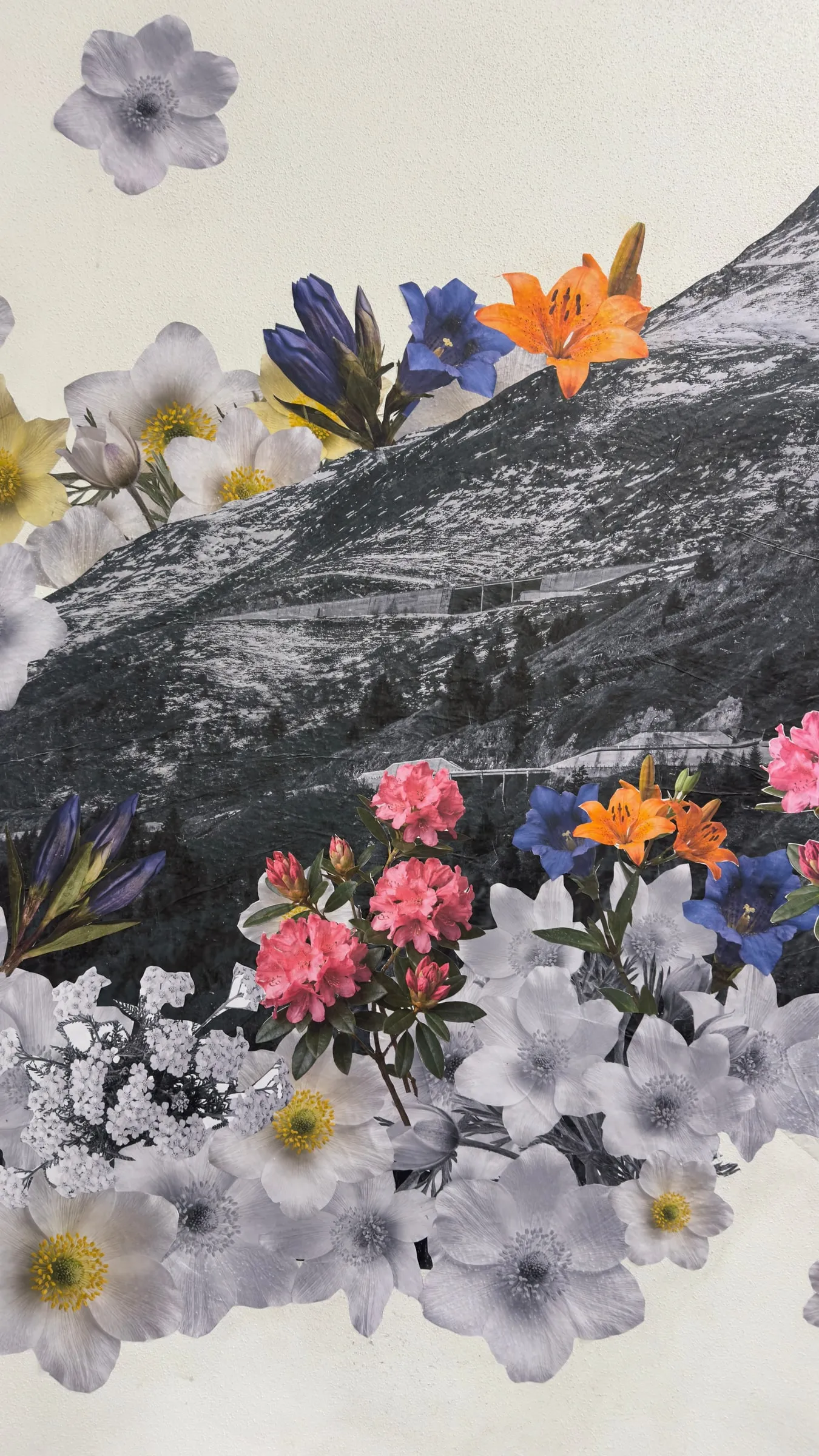
Detail. The alpine flora on the outline of the Gotthard. 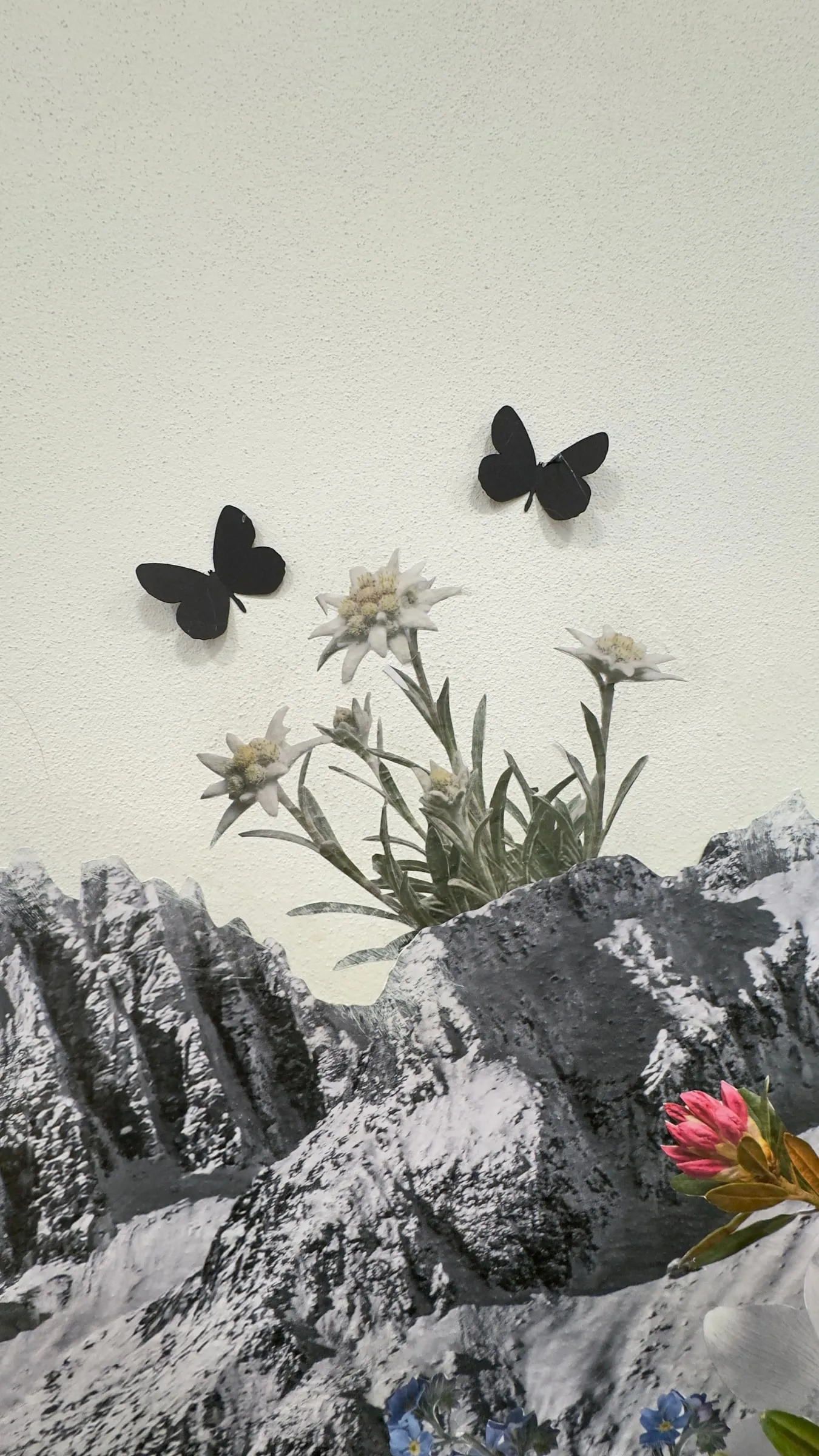
Detail. Edelweiss and butterflies. 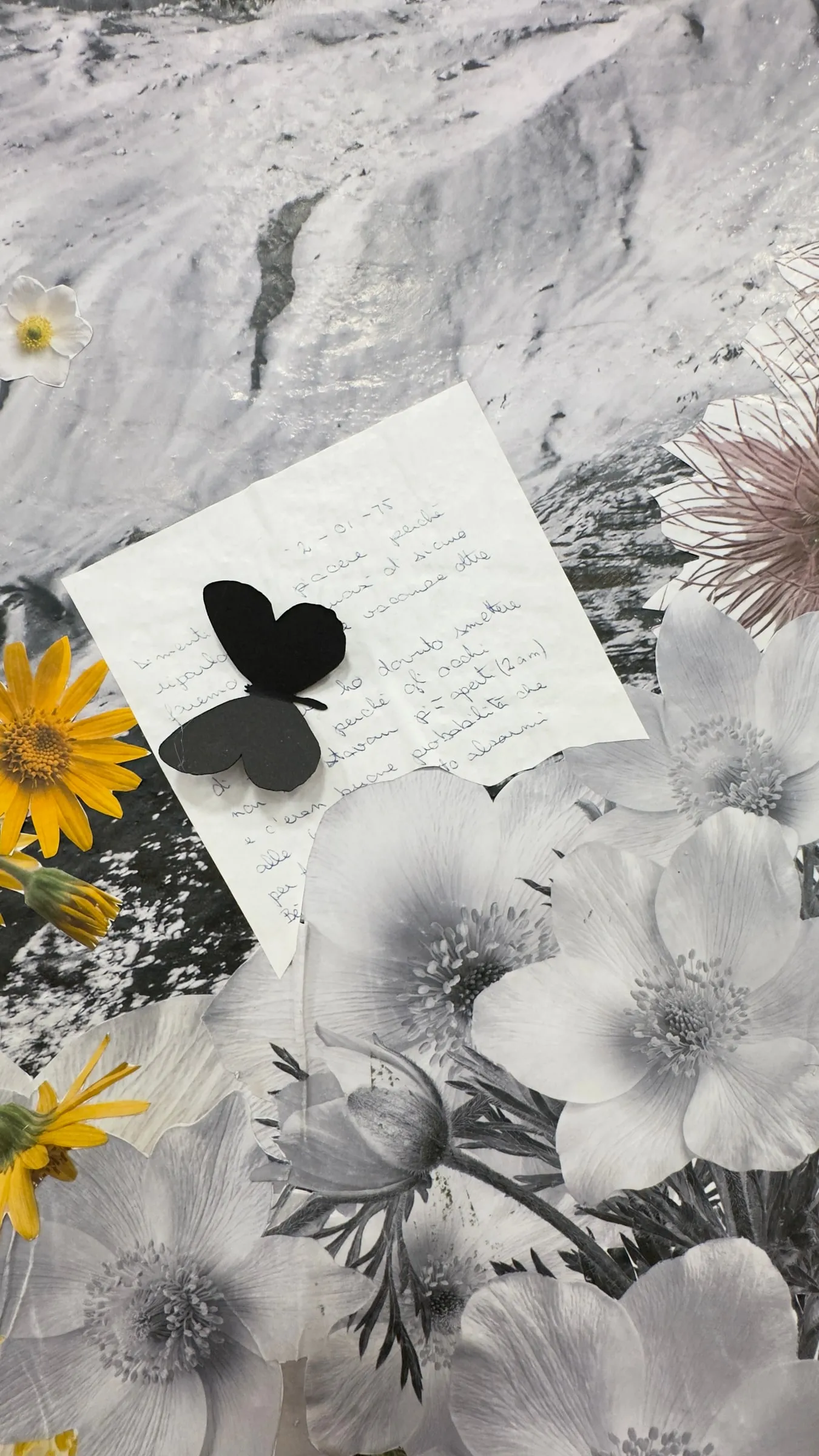
One of the original letters included in the work.
A collective work
The making took three days and involved the population. In collaboration with the Associazione dell’Angolino and with the team of the Casa della Sostenibilità, led by Giovanni Pellegri, the residents of Airolo took part in cutting and preparing the elements of the work.
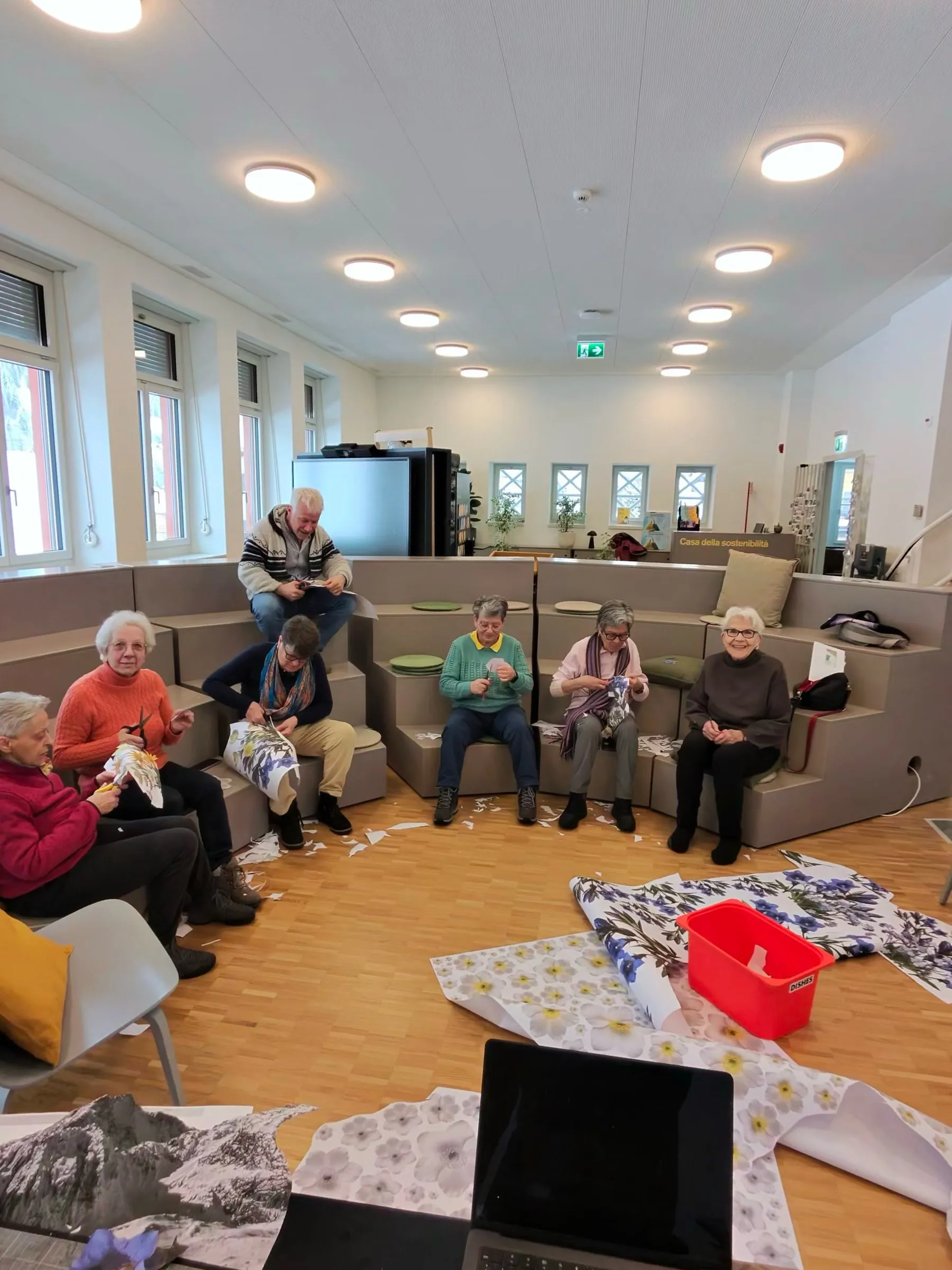
The residents of Airolo cutting out the elements of the work. 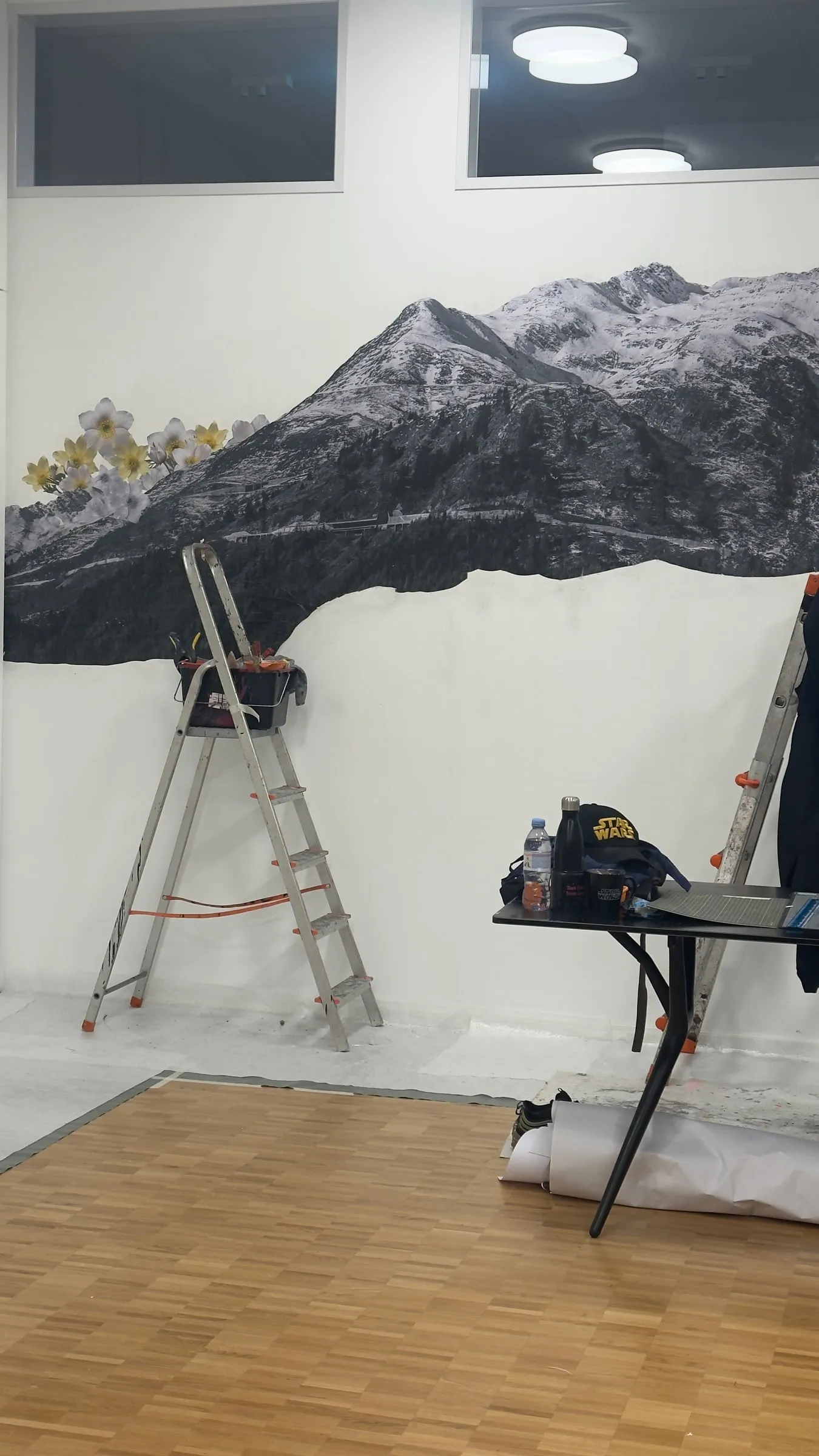
Installing the mountain. 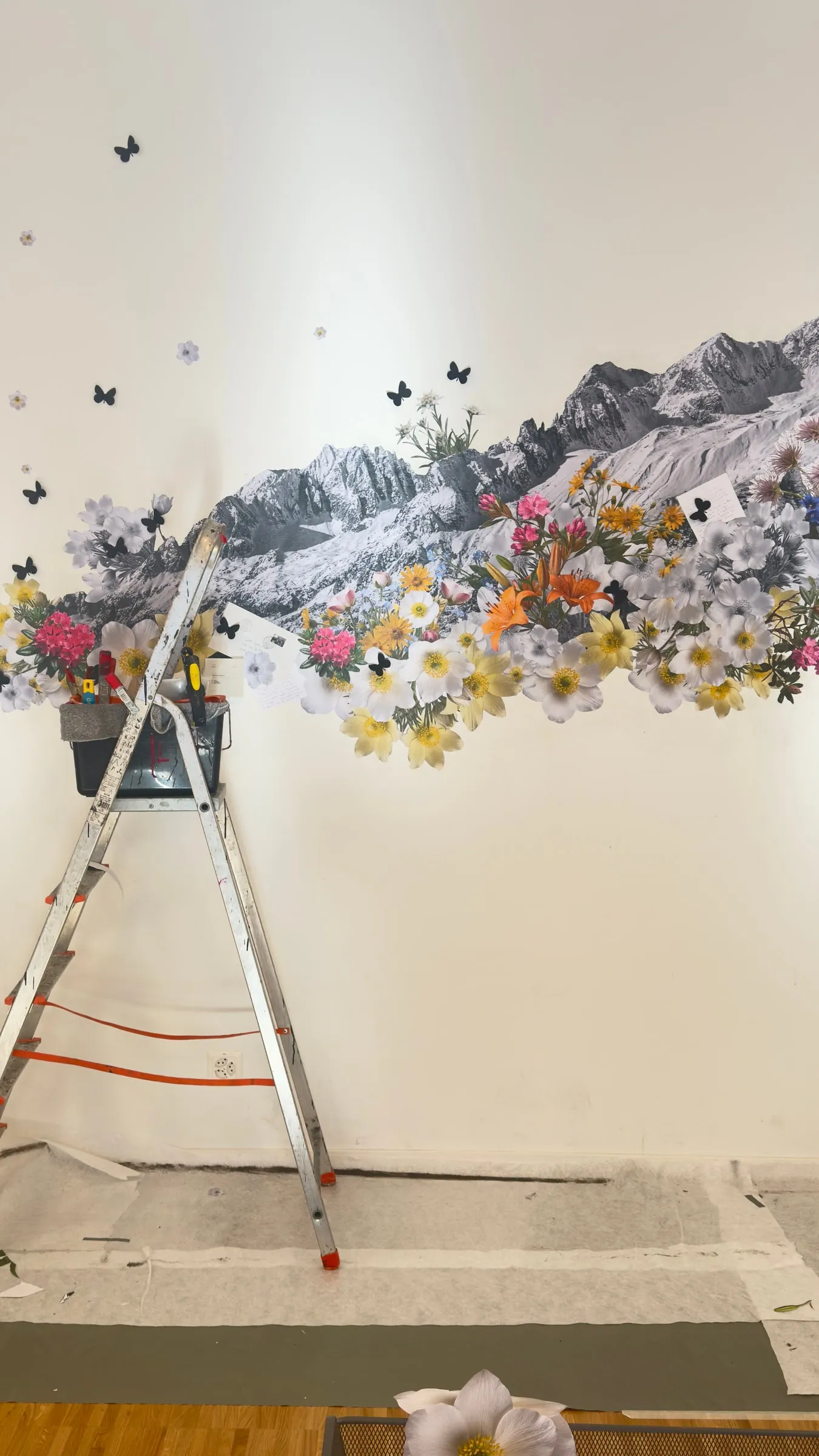
Installing the flowers.
The letters
Original letters entered the composition. The residents brought correspondence that had passed decades ago through that very post office; some letters are fifty years old.
“It is beautiful because they have returned to the place of origin from which they left or where they arrived. These letters tell life stories and memories, creating a moment of strong emotion for all the participants.”
Yuri Catania